
Hidden Reactions Under Bottom-Terminated Components: How Trapped Residues Lead to Solder Failure
Bottom-terminated components (BTCs) offer major electrical and thermal advantages, but their low-standoff geometry creates one significant reliability challenge: materials trapped beneath the component can remain hidden from inspection and may continue changing long after assembly.
Research presented by Foresite at SMTA Pan Pac 2026 showed how residual no-clean flux, outgassing thermal materials, moisture, and confined operating conditions can interact beneath BTCs and ultimately fracture solder joints.
What Was Happening Beneath the Components?
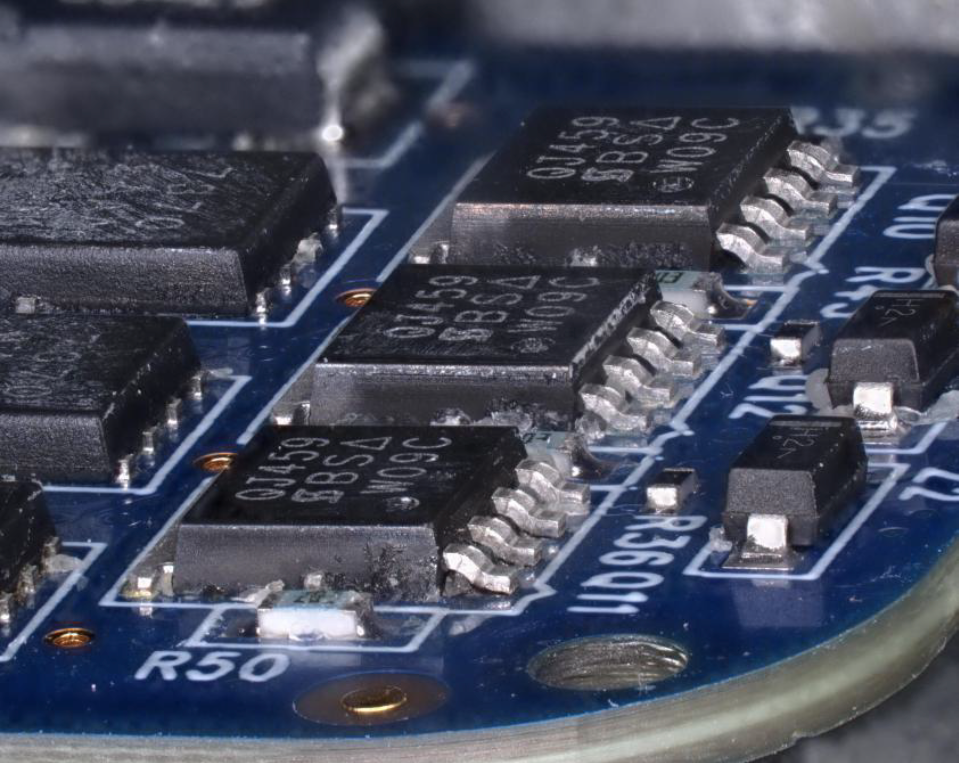
The investigation began with field returns showing fractured SMT solder joints, particularly beneath low-standoff components. Inspectors also found soft, gooey flux residue and material extruding from beneath component bodies.
The pattern was important. The reaction material appeared in trapped areas underneath components, not primarily around exposed lead areas.
The failed assemblies also shared several conditions:
No-clean solder paste with persistent flux residue
Low-standoff components
Silicone-based thermal pads positioned over components
Enclosed or vented systems
Failures developing after roughly six to nine months of operation
These conditions created a confined microenvironment where residues and outgassed materials could interact over time.
What the Analysis Found
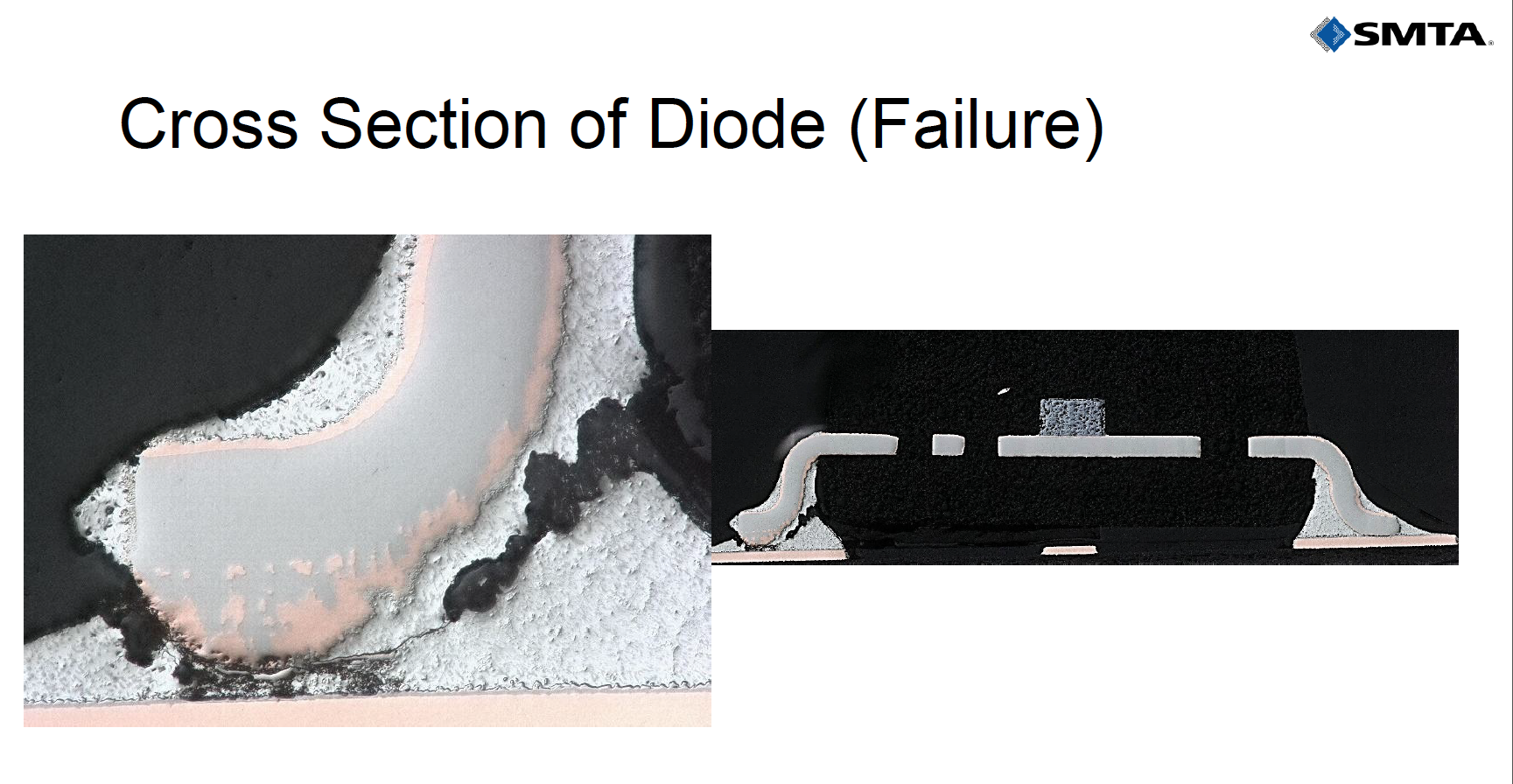
Foresite used FTIR, C3/ion chromatography, SEM/EDS, and cross-sectional analysis to identify the material and understand the failure.
FTIR showed that the extruded material shared characteristics with both the flux residue and silicone thermal-pad material.
Cross-sectional analysis revealed a hard material layer beneath the component and showed that the component had been physically separated from the board and solder surface.
SEM/EDS identified a high concentration of silicon in that material, supporting the conclusion that silicone from the thermal pad was involved in the reaction.
The resulting material was described as non-conductive and non-corrosive, but it still created a serious reliability problem: it expanded beneath the component and applied enough vertical force to fracture the solder joints.
Why This Matters
This failure mechanism is a reminder that not every residue-related failure is caused by corrosion or electrical leakage.
In this case, the main problem was mechanical. A chemical interaction beneath the BTC created an expanding reaction product that physically pushed the component upward.
That makes the failure especially difficult to detect.
A surface inspection may show little or nothing while the reaction progresses underneath the package. By the time extrusion or solder-joint separation becomes visible, the process may have been developing for months.
The testing also highlighted another challenge: a failed sample may not always show high ionic contamination after the reaction has already occurred. Some residues may become chemically bound or less extractable over time, meaning a “clean” test result does not necessarily prove that problematic residues were never present.
The Bigger Reliability Lesson
BTC reliability should not be evaluated only by asking whether a board is clean immediately after manufacturing.
A better question is:
What will the materials trapped beneath this component do after months of heat, moisture, outgassing, and restricted airflow?
That requires looking at cleanliness as an operational condition, not just a manufacturing checkpoint.
Reducing the risk may involve minimizing trapped flux, reviewing cleaning and reflow processes, selecting lower-outgassing materials, improving venting, and considering standoff geometry during design.
The Pan Pac findings make one point especially clear: when residues are trapped beneath a BTC, the chemistry does not necessarily stop when assembly is complete.
Sometimes, that is when the reliability problem begins.