
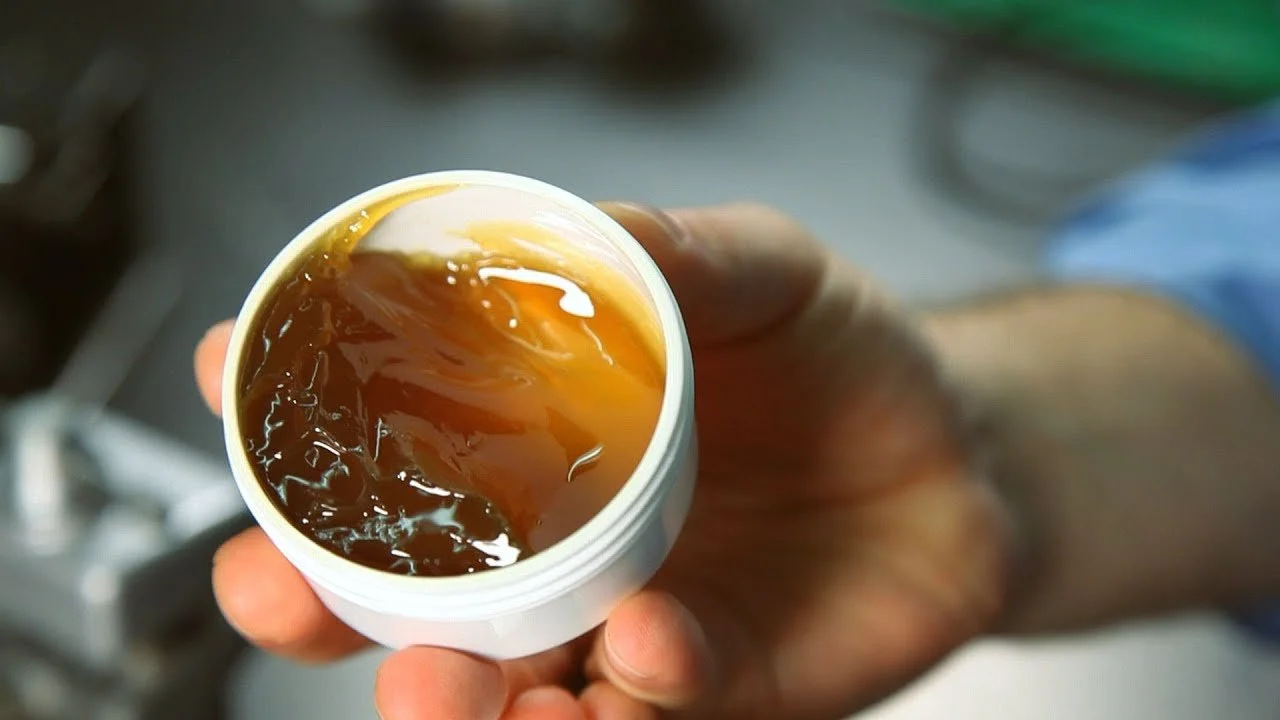
A well-formed solder joint doesn't always guarantee reliable electronics. Trapped flux residue beneath components can create hidden conditions that compromise long-term electrical performance.
Foresite's research explores how thermal processing, component geometry, and flux residue characteristics influence electrical isolation—and why visual inspection doesn't always reveal potential reliability risks.
The Problem with Trapped Flux Residue
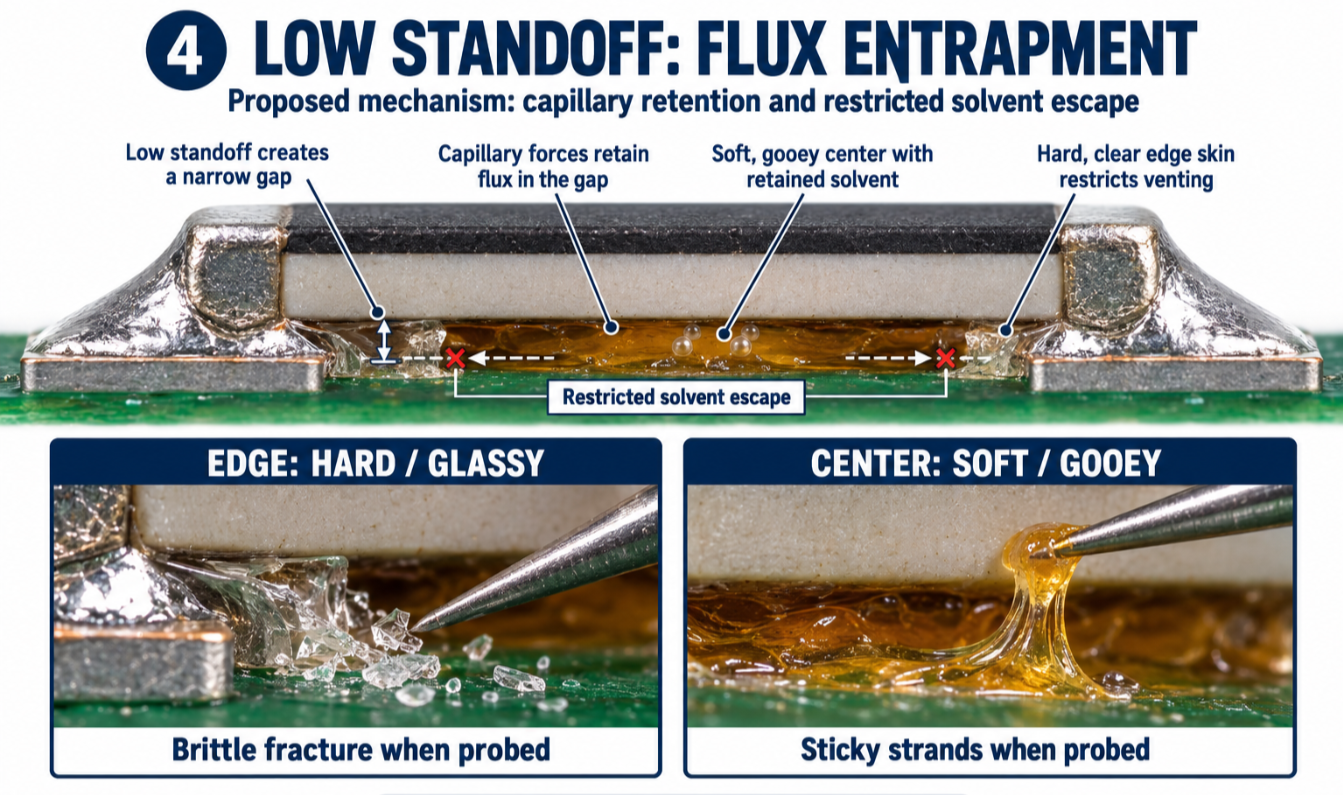
Flux plays a key role in soldering. It removes oxides and promotes proper solder wetting. However, the residue left behind can create reliability concerns, particularly beneath low-standoff components where limited clearance restricts solvent escape.
This can result in three conditions:
A hard, glassy exterior: The outer residue appears dry and stable.
A softer, gooey interior: Trapped material retains different chemical and physical characteristics.
Hidden reliability risks: Higher levels of extractable ions may contribute to reduced electrical performance.
Foresite research has associated confined flux residue with softer deposits, increased ionic contamination, and poorer electrical isolation.
How Thermal Processing Impacts Reliability
In a blind evaluation of three solder pastes, Foresite compared quick-cooling and long-cooling specimens using chemical analysis and surface insulation resistance (SIR) testing.
The findings revealed significant differences:
Chemical contamination: Paste A quick-cool specimens contained 1,962.35 µg/in² of extractable organic acids, compared with just 10.25 µg/in² for long-cool specimens. Similar trends appeared across all three pastes.
Electrical performance: During 168 hours of testing at 40°C and 90% relative humidity, quick-cool specimens experienced reduced insulation resistance, while long-cool specimens maintained higher electrical isolation.
Visual inspection: No visible dendrites were observed, despite periods of reduced electrical performance.
These results demonstrate how thermal processing can influence residue characteristics and electrical reliability. However, differences in heating and dwell histories mean the improvements cannot be attributed to cooling rate alone.
Why Component Geometry Matters
Low-standoff components present additional challenges because restricted spaces can trap flux residue and limit solvent escape.
Several factors influence residue characteristics:
Component clearance: Smaller gaps restrict solvent movement.
Flux volume: Larger deposits can affect trapped residue conditions.
Venting pathways: Distance from an open edge influences solvent escape.
Thermal processing: Heating and cooling affect how residue develops.
A hardened exterior can conceal softer material underneath, reinforcing the importance of evaluating residue beneath components rather than relying on surface appearance.
Improving Long-Term Electrical Reliability
Preventing reliability issues requires evaluating both residue characteristics and electrical performance.
Manufacturers can strengthen their processes by monitoring thermal conditions, examining trapped deposits, and using analytical testing to identify contamination. Correlating chemical findings with electrical measurements helps determine whether residue conditions present a reliability risk.
It's also important to verify that corrective actions provide lasting improvements under relevant moisture and electrical bias conditions rather than temporary drying effects.
Ultimately, a properly formed solder joint is only part of a reliable electronic assembly. Understanding how flux residue behaves beneath components helps manufacturers identify hidden risks before they become failures.
To learn more about flux residue analysis and electronics reliability testing, visit www.foresiteinc.com.
Source: Understanding Gooey Flux and Electrical Isolation, Terry Munson, Foresite Inc., October 23, 2026.