
Understanding PCBA Cleanliness, Part 1:
The Hidden Reliability Risk
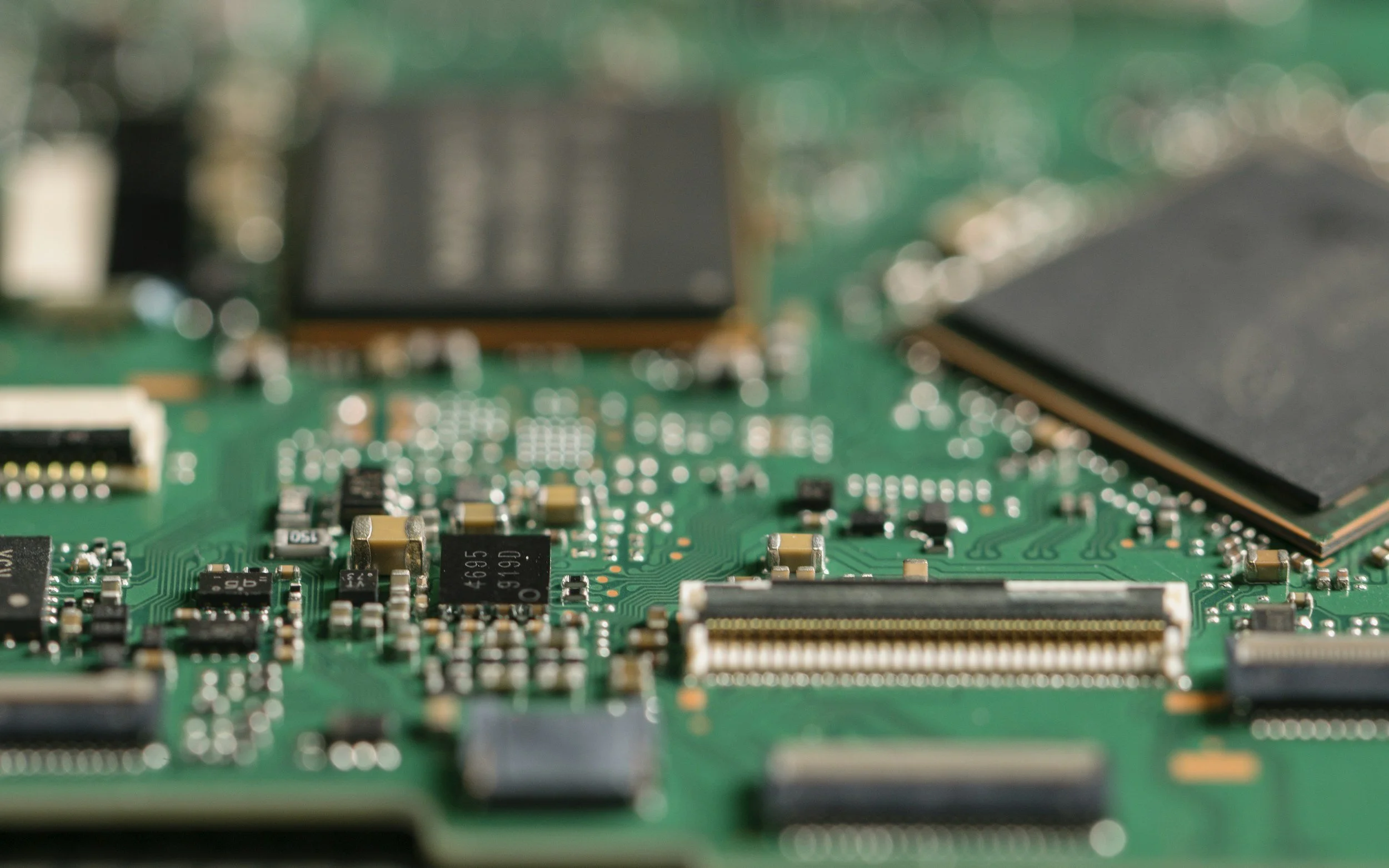
Cleanliness in printed circuit board assemblies (PCBAs) is often treated as a final checkpoint—something to validate after assembly. But that view misses a key truth: cleanliness is cumulative.
By the time a board reaches inspection, it has already been shaped by numerous chemical, mechanical, and environmental interactions. Residues don’t come from one source. Rather, they build across fabrication, component manufacturing, and assembly.
That’s what makes PCBA cleanliness difficult to define, and even harder to use as a reliable predictor of long-term performance.
Cleanliness Starts Long Before Assembly
A common misconception is that cleanliness is primarily an assembly issue. In reality, it begins during PCB fabrication. Processes like etching, plating, lamination, and rinsing can all leave behind ionic or organic residues. If not tightly controlled, contamination can persist in ways that are difficult to detect or remove later.
This often appears as:
Residues trapped in vias or inner layers
Ionic carryover from insufficient rinsing
Surface films that interact with later chemistries
At this stage, boards may appear clean but already carry latent risk.
Components Bring Their Own Variables
Even well-controlled boards are affected by the components mounted to them. Component manufacturing processes—molding, deflash, plating, cleaning—can leave trace residues that vary by supplier.
These may include:
Molding or deflash byproducts
Plating chemistry remnants
Oils or cleaning agents
Once assembled, these materials interact with flux residues, board contamination, and environmental exposure and create a far more complex chemistry than any single source.
Assembly Compounds the Problem
By assembly, the PCBA already contains contamination from the board and components. Assembly adds fluxes, soldering byproducts, and handling residues.
At this point, cleanliness becomes less about individual sources and more about interactions.
Risks begin to emerge through:
Residues concentrated in tight geometries
Cleaning may not be reaching critical areas
Mixed chemistries behaving unpredictably
Contamination is no longer isolated, but rather, integrated into multiple areas and steps.
Moving Toward a Predictive Approach
Standards define acceptable cleanliness levels, but passing them doesn’t guarantee reliability.
Most metrics are based on thresholds, not behavior. A board may meet limits yet still contain residues that become active under moisture, electrical bias, and time, thus leading to corrosion or electrochemical migration. This means cleanliness isn’t static, but rather evolves with the environment.
“Clean enough” becomes difficult to define due to these issues.
To make cleanliness a useful predictor of reliability, it must be evaluated as part of a system—not a final measurement. This requires looking upstream at fabrication and components to understand how residues interact early. Then, using targeted analytical methods, to find where reliability concerns may arise.
Techniques like ion chromatography and surface insulation resistance testing provide insight into both contamination levels and failure risk.
Cleanliness as a System-Level Responsibility
PCBA cleanliness isn’t owned by a single process. It reflects decisions across the entire manufacturing chain—from materials to suppliers to process integration.
When treated as a checkbox, issues are often discovered too late. When treated as a system-level input, cleanliness becomes a tool for predicting and preventing failures.