
When Moisture Becomes a Silent Threat: Inner-Layer Shorting & CAF Failures
By Foresite
Inner-layer shorting often begins long before power is ever applied—sometimes with nothing more than a trace of moisture left on the PCB before lamination. That tiny lapse can create gaps between layers, debris fields, copper corrosion, and ultimately catastrophic CAF-related shorts once the board is powered. This condensed overview explains how moisture compromises internal structures and what engineers should watch for during diagnosis.
Why Moisture Matters More Than Most Teams Realize
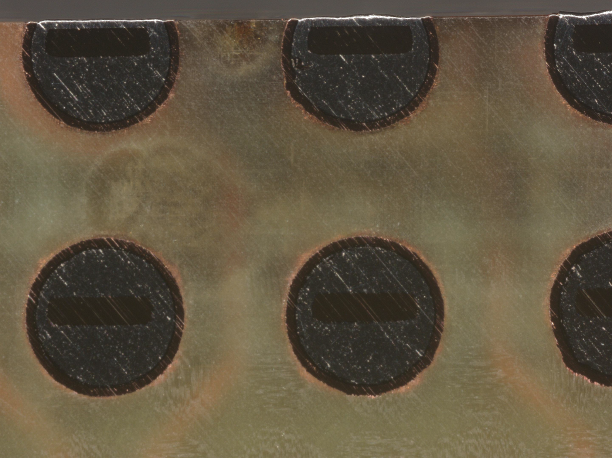
Printed circuit boards naturally absorb moisture from the environment. Even properly stored materials pick up humidity while awaiting processing. During the PCB fabrication, if this moisture isn’t fully removed before lamination, it becomes trapped inside the stack. Under lamination heat and pressure, trapped moisture expands and prevents the resin from fully flowing into the weave. This creates micro-voids and gaps that, once drilled and plated, form pathways between vias/PTH barrels that can absorb plating solutions. What should be a smooth, uniform bond line instead becomes dotted with tiny voids.
These micro voids are difficult to detect through external inspection or compliance micro-sections. Yet electrically, they become pockets where contamination gathers and corrosion begins—creating the perfect conditions for long-term reliability issues.
How Trapped Moisture Turns Into an Inner-Layer Short
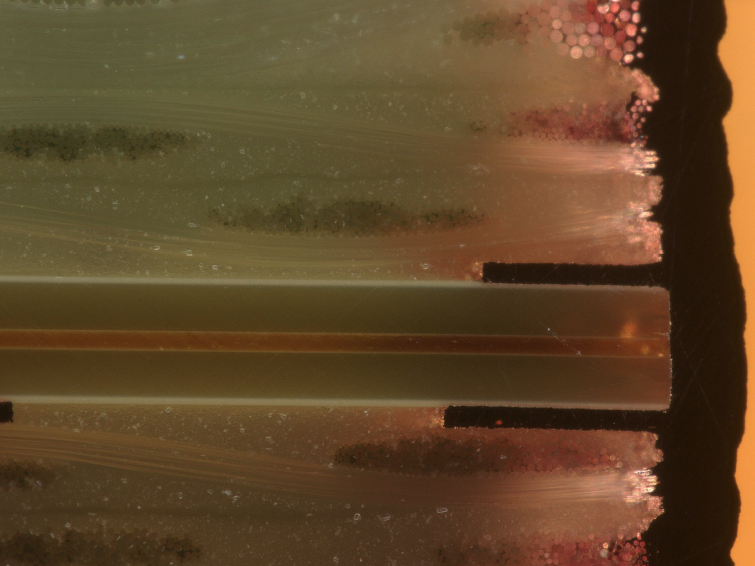
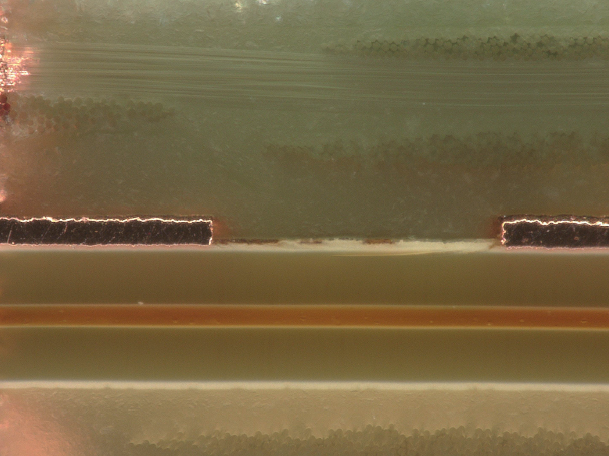
As moisture expands during lamination, it forms a cavity between copper and resin. Over time, this void becomes a debris trap during drilling, particularly for blind/buried vias and tightly spaced plated-through holes. When we expose these internal planes during failure analysis, we have uncovered fiberglass fragments due to drill damage, CAF and corroded copper. This micro void with residue lowers the designed isolation and reduces the dielectric strength between internal structures. It also provides early pathways for conduction.
Copper in contact with these micro-voids or resin-starved weave, along with fabrication fluids trapped on the PCB’s innerlayers, can cause significant performance issues. Dissolved ions move through the void and along the fiberglass weave, setting the stage for conductive anodic filament (CAF) formation. Once voltage is applied in the field, the combination of moisture, ionic activity, and weakened insulation becomes highly unstable. Shorts may develop over time, and because the failure occurs between layers, the trapped heat often results in localized charring deep inside the board.
Why Cross-Sections for Compliance Alone May Miss these Issues
The compliance inspection process is intended to confirm that the stack-up and overall construction match the drawings and meet general requirements. However, because multilayer PCBs are increasingly complex—and inner-layer defects are difficult to detect—the industry documents very few inner-layer failures. In reality, as board designs push higher voltages and currents, investigative laboratories are seeing a growing number of inner-layer shorts.
A major challenge is that these defects are often not visible by X-ray. In some cases, the issue may appear only in a single panel within a 10–16-panel stack, influenced by drilling variables such as speed or bit sharpness. The defect may affect just one via or barrel rather than the entire array, making it even harder to catch. Cross-sectional analysis of a bare panel may not reveal the failure itself, though it can expose process variability and micro-voids in critical areas that ultimately lead to the short.
Understanding and Investigating PCB Internal Structure for Variability
Cross-sectional assessment of the internal planes shows a tight, uniform material-to-layer bond. The resin flows smoothly into the weave and is fully integrated, with no gaps. Under magnification, the bond line appears clean and cohesive.
Investigating inner-layer failures requires time and meticulous attention to detail, particularly when examining bond issues or areas of resin starvation that may reveal what occurred during fabrication. Understanding a cross-sectional view of where a short has formed provides only one perspective; additional lapping may be required to fully reconstruct the sequence of events that led to the failure.
What This Means for Reliability
A microscopic amount of moisture can quietly undermine the integrity of an entire PCB. Left undiscovered, it creates voids, drives corrosion, enables CAF formation, and leads to failures that are costly, time-consuming, and difficult to diagnose. But with proper moisture control and deeper analytical tools, these issues are entirely preventable.
The image comparisons accompanying this article illustrate the contrast clearly: a healthy bond line signals long-term stability, while a moisture-compromised plane reveals how quickly reliability can deteriorate. The difference may be subtle at first—but the consequences are dramatic.